Market Development Manager

Québec Market Development

Fast market activation for an under-recognized foodservice brand.
Montréal, QC, CanadaFeb. 2026–PresentQuébec & Eastern Canada

HORECA & Co. — Foodservice tableware distributor developing RAK Porcelain in Québec and Eastern Canada.

205target accounts mapped
148accounts contacted
94targeted samples delivered
14new accounts won
30future replacement opportunities
Strategy in 60 seconds

Three decisions shaped the first market-entry phase.

01 · PRODUCT WEDGE

Expose an undervalued modern portfolio.

RAK Earth and similar ranges combined an artisanal-looking visual language with the durability, consistency and replenishment expected in professional foodservice.

02 · DIRECT MARKET REACH

Start with chef-led independents.

Direct access to decision makers made these accounts faster to develop for awareness, product pilots and early sales than more layered hotel or group structures.

03 · ADAPT FROM FEEDBACK

Let the field refine the strategy.

Chef questions, objections, operational tests and replacement timing were fed back into product selection, qualification and future account priorities.

Go-to-market method

We did not lead with a full catalogue and a standard pitch.

The account was researched first. Google, social media, menus and plating photography were used to identify product fit; selected samples were then delivered with a customized message and followed by direct chef feedback.

01ResearchRestaurant, chef, menu, current plates.
02MatchColour, form, cuisine and plating style.
03Pilot1–2 adapted samples, not catalogue breadth.
04FeedbackChef reaction, demands and operational remarks.
05Commercial actionOrder, quote, replacement timing or next follow-up.
CRM & team execution

The CRM structured the market and guided field execution.

The CRM was used to map and prioritize targets, coordinate two sales representatives, track samples and follow-ups, and separate immediate opportunities from future replacement potential.

Target accounts mapped
205
Accounts contacted
148
Targeted samples delivered
94
New accounts won
14
Visual field evidence

Photo-led product matching translated into a real restaurant pilot.

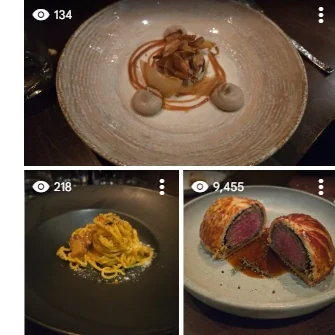
Two images show the restaurant’s existing tableware. The Beef Wellington was photographed on the RAK plate selected for the pilot.

Dessert on the restaurant's current plate
Current plateExisting restaurant presentation
Pasta on the restaurant's current plate
Current plateExisting restaurant presentation
Beef Wellington on selected RAK plate
RAK pilot plateSelected to fit the restaurant’s cuisine and visual identity
Google Reviews photo-view snapshot showing 134 views for dessert on current plate, 218 for pasta on current plate, and 9,455 for Beef Wellington on the selected RAK plate
Restaurant Google Reviews · 1 month after posting9,455 views for the RAK-plated Beef Wellington photo

The three photos were followed over the same one-month period. The RAK pilot-plate image reached 9,455 views, compared with 218 and 134 views for dishes shown on the restaurant’s existing plates.

Interpretation: a strong visual-engagement signal supporting the product-match hypothesis; it does not prove that the plate alone caused the difference.
Strategy evolution

Fast reach first; stronger replenishment economics next.

Chef-led independents created awareness, early sales and fast feedback. Field experience also showed that strong product appreciation did not always mean an immediate buying window, so replacement timing and higher-volume operators became more important qualification variables.

Phase 1

Chef-led independents

  • Direct chef access
  • Fast awareness
  • Product pilots
  • Early sales
  • Visual validation
Expanded focus

Higher-volume independents

  • Larger quantities
  • Higher breakage / replacement need
  • More frequent replenishment
  • Operational value
  • Recurring commercial potential
Deep dive

Strategic Decisions & Market Learnings

Additional detail on how the commercial approach changed by account type, and how HubSpot was deployed to turn the strategy into a repeatable team process.

Adaptive commercial playbookThe pitch changed with the account—not the strategy

Field feedback showed that one standard sales pitch would not work across the market. The core strategy stayed consistent—understand the account, reduce adoption friction and prove value physically—but the proposition changed according to the restaurant’s buying habits, current tabletop and operational pain points.

Scenario 1Restaurant committed to artisanal tablewareDo not ask the chef to replace the visual identity of the whole table. Position one RAK piece as a technical complement for a specific use where professional porcelain adds value—for example repeated edge-chipping exposure, intensive handling, frequent commercial-dishwasher cycles or a format that needs more operational consistency. The sale becomes “one plate that solves one use case,” not “replace your artisanal collection.”
Scenario 2Chef prefers buying through local distributorsRemove the purchasing-channel objection rather than asking the customer to change habits. After RAK was added to two major local restaurant/hotel equipment distributors, chefs who preferred their existing local supply relationships could source the product through a familiar channel while retaining easier replenishment and local support.
Scenario 3Strong product fit, but recent tableware investmentDo not force an immediate conversion. Keep the account qualified, record the replacement window, preserve the product trial/feedback and move the opportunity into future replacement. Timing becomes part of qualification, not a reason to discard a good account.
Scenario 4Higher-volume operational accountShift the conversation from aesthetics first to operating economics: durability, breakage exposure, consistency, availability and replenishment. The objective is to identify where a more technical product and dependable supply can create recurring value.

Commercial learning: the market was not segmented only by restaurant type. It was also segmented by how each account buys, what it already uses, what problem it needs solved and when it is realistically able to change.

HubSpot CRM deployment & structureHow the market-development system was built for the team

Summary: I deployed HubSpot as the operating layer for the Québec market-development strategy and guided two sales representatives through its use. The objective was not simply to store contacts; it was to convert a broad restaurant market into a prioritized, traceable pipeline with clear ownership, samples, next actions and replacement timing.

HubSpot objectCompaniesRestaurant and hospitality accounts. The structure captured the account segment, priority, commercial accessibility, current supplier/tableware context, product-fit logic, ownership and replacement potential.
HubSpot objectContactsChefs, owners, buyers and other decision makers linked to each account, with role, access to the decision process and interaction history.
Commercial layerDeals / opportunitiesActive pilots, quotes, purchase opportunities and future replacement opportunities, each tied to an owner, stage, next action and timing.
Pipeline logic: Mapped → Prioritized → Contacted → Sample / pilot → Feedback or test → Qualified opportunity → Quote / order or future replacement → Won / lost / deferred.
How the CRM was used operationally
Segment & prioritizeRank accounts using decision-maker access, chef involvement, product fit, volume/replacement potential, current supplier and commercial accessibility.
Assign & coordinateGive each opportunity clear ownership across the two sales reps, while maintaining one shared view of the market and avoiding duplicated or unstructured follow-up.
Track samplesRecord which account received a sample, the selected product/pilot, its status, feedback and the next commercial action.
Control follow-upUse next-action dates for chef feedback, product tests, quotations and later replacement windows instead of relying on memory.
Separate timing from fitKeep strong accounts visible even when the buying window is later, creating a distinct future-replacement pipeline rather than treating them as lost.
Adapt the strategyAggregate chef objections, product requests and account outcomes so field intelligence could change product selection, messaging and future targeting.
Six-month CRM output
205accounts mapped
148accounts contacted
94targeted samples
14new accounts won
30future replacement opportunities

Management value: HubSpot connected market mapping, team activity and field learning in one commercial system, making it possible to see not only who had been contacted, but what had been tested, what the account needed and what should happen next.

Market opportunity & competitive wedgeWhy the modern RAK portfolio was strategically useful

I identified an underexploited position for contemporary RAK ranges such as RAK Earth: visually distinctive enough to compete in chef-led environments, while retaining the durability, consistency and replenishment advantages of professional porcelain.

Conventional commercial porcelainOperationally proven, often more visually conventional.
Artisanal ceramicsDistinctive visual character; operating consistency varies by source.
RAK contemporary rangesArtisanal-inspired visual language with commercial foodservice durability.
Customization / commercialization projectCustomer need → design → manufacturer → follow-up

For a customized-plate opportunity, I translated customer requirements into design and production needs, coordinated feasibility and iterations with the manufacturer, and maintained commercial follow-up throughout the process.

What this case demonstrates

Capabilities evidenced through the work above.

Market developmentSales-team guidanceHubSpot CRMDirect market activationProduct-market fitCommercial adaptation